
How to Make Your Own Tract
For many years, tracts have been a great evangelistic tool, especially when there is a personal connection. Here is how you could make your own.

Tracts have always been, and remain, a great evangelistic tool. They’re not for everyone in every situation but are much more adaptable and useful than some may think. They’re a relatively easy giveaway, cheap to buy or print, and perhaps more easily read than a book (though, for the record, I’m a great fan of evangelistic books too).
What gives a tract… traction (if you’ll excuse the pun) is connection.
The best tract we used recently at Christchurch Harborough was the Jubilee tract by Roger Carswell written for the late Queen’s Platinum Jubilee in 2022. It was on topic (everyone was talking about the milestone), short, pithy, clear, and focused. All that’s needed in a tract.
And what we’ve found here in sleepy Market Harborough is that something local has the same kind of impact.
A local connection
People are interested in local landmarks, people are intrigued by local individuals, people even engage with local history when they display no other interest in the subject. Harborough is a funny place. It has an old core, and a small group of Harborians who have lived here all their lives. But most are newcomers, moving here for schools, work and cheaper housing.
Yet even without this long-standing familial connection to the town, people still love the local. People love that they can shop in town and don’t need to travel to nearby Leicester. People value local services. People campaigned to keep a local cottage hospital (and won; it was rebuilt).
Our tract builds on that. It’s not going to work for you because it’s based on our local landmark – the old Grammar School, built in 1614 by a local businessman, Robert Smyth. He wanted every boy in town (sorry, girls!) to learn Latin and have a Bible. As a state schoolboy, I can say that at least one of those aspirations was commendable.
The grammar school building – essentially a small room on raised wooden stilts – is now a local landmark, recognised by everyone in town and from the district around. We’ve even incorporated it into our church logo.
It has five Bible verses picked out in gold around the centre of the structure: Ephesians 2:8-9; Matthew 6:33; 1 Samuel 16:7; Psalm 122:1; and Psalm 127:1.
-

CC BY2.0 by Phil McIver
-
CC BY2.0 by Holly Victoria Norval
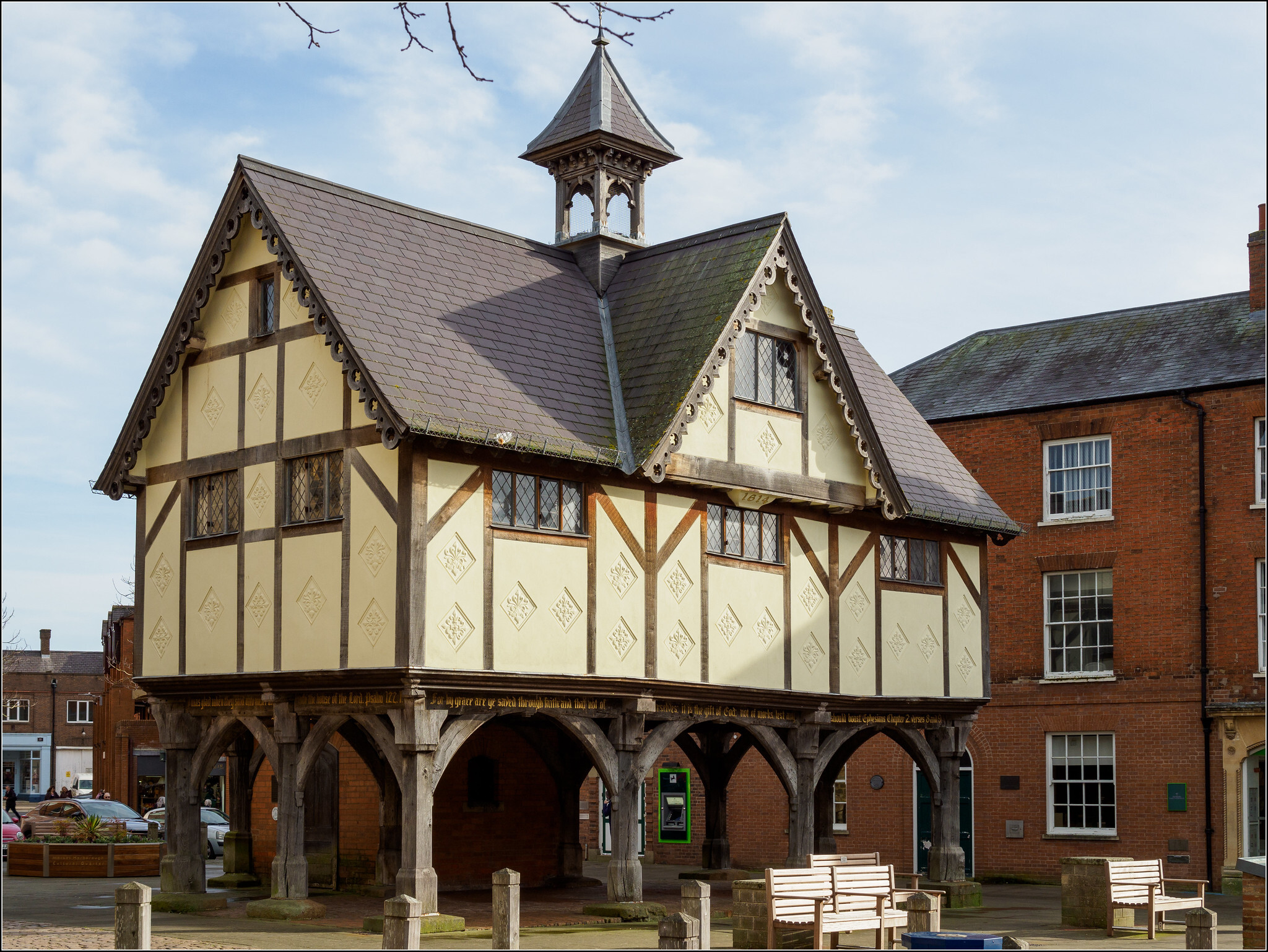

We’ve written a short tract using those verses that explains the gospel and invites people to believe or to come to church. It’s not going to work for you; it’s local, you see. It was reasonably easy to produce, though I doubt it’s going to win any design awards, and when people see it, together with the front page (‘Uncover the hidden story’) it intrigues.
Your turn
You may have to do some digging to find something that connects, but there probably is something, somewhere, or someone that will do so.
We could have gone with the Philip Doddridge, the great hymnwriter, after whom a local road is named. He pastored a church in the town and started the first non-conformist seminary here. Or we could have used the English Bible – first written down by Wycliffe’s team in a small village which adjoins our town in the 14th century. We decided that the grammar school was the most obvious choice.
And, of course, it should go without saying: tracts are gospel tracts.
They’re not history documents (in our case) or interesting stories about individuals. They are opportunities to share the good news that Jesus came to earth, died in our place, and rose for our justification. Make sure that is in there!
Could you do something similar?
What’s local and Christian? Do you know? Could you make something of it?
And if you’re stumped, there are plenty of off-the-shelf tracts which will serve you well.
Don’t give up on tracts just yet. And even better, why not give some thought to writing your own?


